
"Douai seed"
15242 article(s) found
How to grow small grains of coffee in Baoshan, Yunnan? can we grow good coffee beans in China?
Professional coffee knowledge exchange more coffee bean information please pay attention to the coffee workshop (Wechat official account cafe_style) 1, the environmental conditions required by small Coffee Coffee is native to Ethiopia in north-central Africa, located in 69 N, 3440 E, 13001900m above sea level, precipitation 16001900mm, annual average temperature 20 ℃ lower layer of tropical rain forest. In the long-term process of evolution
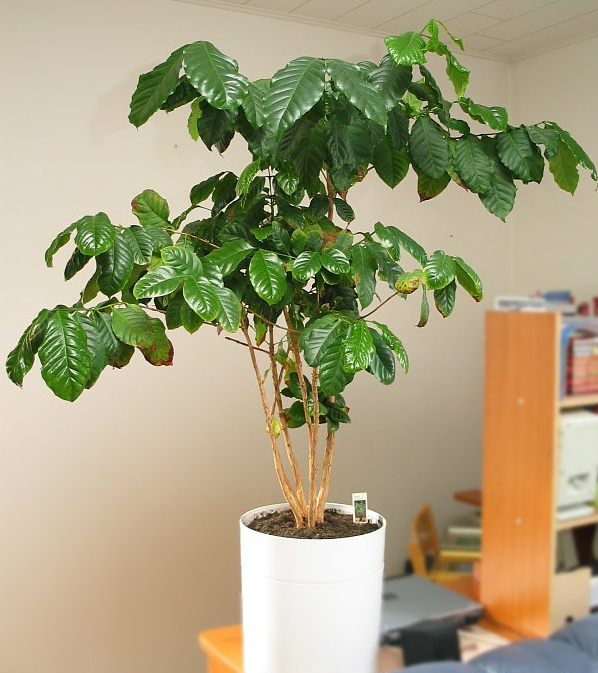
Technical Essentials of planting domestic Coffee trees
First, seeds: they can be picked by themselves or purchased online. Second, seed treatment: choose coffee seeds with good quality and parchment. Third, planting: the treated seeds can be planted directly or soaked in water before planting. Direct planting is very simple, put the seeds directly into vermiculite, the thickness of the surface soil and the thickness of the seeds can be the same; soaking varies according to different seasons. Such as

Decomposition diagram of structural names of various parts of coffee beans
The structure and name decomposition diagram of coffee beans generally there are two pairs of seeds in the fruit, but occasionally there is only one seed in the fruit, which is called Pea berry. The coffee we usually drink is made by grinding, brewing and other steps after roasting the seeds at the center of the coffee fruit. Coffee fruit is mainly transformed into raw coffee beans by the following three treatments.
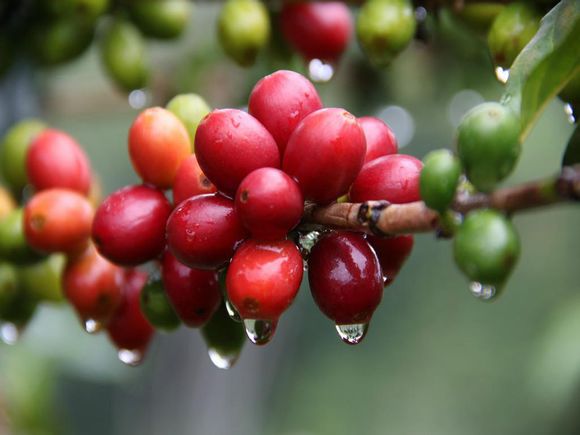
Coffee bean seed price how much coffee bean planting coffee bean price seed coffee raw bean sun plus snow
Coffee seeds cannot be grown directly with coffee fruits picked from coffee trees. Peeling coffee fruits is like planting peanuts. If you plant a peanut with a shell in the soil, it cannot sprout. You must plant peanuts. It is the same with medium coffee. If you have coffee fruit in your hand, you can first bask it in the sun and shake it until it is shaken inside.
Coffee planting: sowing seeds in coffee estates in Nicaragua
Professional baristas Communication Please follow the Coffee Workshop (official Wechat account cafe_style) when you were young, you visited the nursery. All you know is to plant seeds, irrigate them on time, and have enough sunshine, so that the seedlings will grow. With more scientific knowledge, we also realize the importance of fertilization and disinfestation. People who grow up in cities have little contact with the lives of farmers except for potted plants at home. Because of coffee, the author is organic.

Basic information about coffee in the Encyclopedia of Fine Coffee
[scientific name] the small seed is Coffea arabicaL., the medium seed is Coffea canephora, the large seed is Coffea liberica, the small seed is also called Arabian, the middle seed is also called Gaffra, and the large seed is also called Liberian species, there are two common species: Arabica and Robusta. Rubiaceae (Rubiaceae), coffee genus (Coffea) [at home and abroad]

There are several seed treatments in coffee berries.
There are several seed treatments in coffee berries the index finger and thumb of the collector are the best tools for collecting ripe berries. Scraping the fruit off a whole branch by hand, or using an automated harvester, can't tell the ripe berries from the green berries. The ripe coffee berries are bright red with sweet flesh and contain a pair of seeds, namely coffee beans (Cof).

Coffee varieties quality large seed-coffee classification varieties and characteristics
Coffee varieties quality large seed-coffee classification varieties and characteristics of young trees refers to the period from planting to production, about 2-3 years. The main characteristic of this period is vigorous vegetative growth, 6-8 pairs of branches can be drawn every year, with roots, stems and leaves growing as the center, and the above-ground and underground parts expand rapidly to form ideal plant structure and prepare for production. Primiparous period refers to the beginning of labor

Common sense of Coffee in China characteristics of small seed Coffee in Yunnan
The small seed species is Coffea arabica L., the medium grain species is Coffea canephora, and the large grain species is Coffea liberica family: Rubiaceae Coffee is also called Arabian species, medium grain species is also called Gaffra species, and large grain species are also called Liberian species, there are two common species: Arabica and Robusta. Coffee is rich in protein, fat,
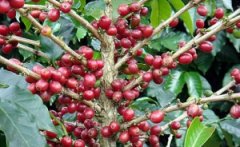
[coffee encyclopedia] from seeds to cups
I originally wanted to write an article called from seed to cup, but later I found that there were too many articles in the coffee. Also, a small red fruit for several years, the harvest and processing of farmers, across the ocean. The fine processing distributed to local bakers and the careful cooking of baristas is a story in itself. Let's talk about coffee beans in the first season, from our cup.
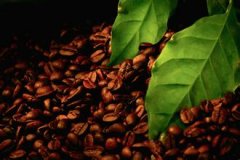
Coffee beans have the same characteristics as those of coffee beans.
1. The seed coat of small fruit coffee has been removed, oval or oval in shape, 8-10mm in length, 5-7mm in diameter, 3-4mm in thickness in the middle, raised on the back, flat on the ventral surface, with slightly curved longitudinal groove and paper seed coat marks. Raw products are yellow or dark green; baked products are dark brown with special aroma and slightly bitter taste. Astringent. Coffee flower 2. Coffee seeds are slightly larger, ovoid, 9-11mm long and 7-7-in diameter.
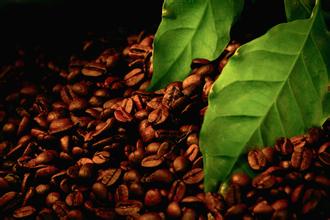
Coffee beans have the same characteristics as those of coffee beans.
1. The seed coat of small fruit coffee has been removed, oval or oval in shape, 8-10mm in length, 5-7mm in diameter, 3-4mm in thickness in the middle, raised on the back, flat on the ventral surface, with slightly curved longitudinal groove and paper seed coat marks. Raw products are yellow or dark green; baked products are dark brown with special aroma and slightly bitter taste. Astringent. Coffee flower 2. Coffee seeds are slightly larger, ovoid, 9-11mm long and 7-7-in diameter.
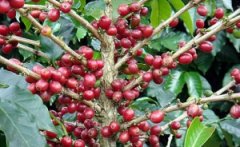
[coffee encyclopedia] # from seed to cup # the first season has nothing to do with coffee, just talk about it for a lifetime
I originally wanted to write an article called from seed to cup, but later I found that there were too many articles in the coffee. Also, a small red fruit for several years, the harvest and processing of farmers, across the ocean. The fine processing distributed to local bakers and the careful cooking of baristas is a story in itself. Let's talk about coffee beans in the first season, from our cup.
How is the coffee fruit turned into coffee beans? what is the parchment that wraps coffee beans?
Communication of professional baristas Please follow the coffee workshop (Wechat official account cafe_style) this is a kind of rich fragrant coffee, it is the seed of coffee tree fruit. The unique aroma and taste of coffee are made by a thermal reaction called roasting. This time we will introduce raw beans before the coffee is roasted. What are coffee beans? First of all, coffee beans are the seeds of coffee trees (Rubiaceae
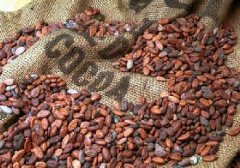
There are two seeds in the coffee berry, which are coffee beans.
Usually there are two seeds in a coffee berry, but after picking, about 5-10% of the berries often have only one seed, because the original ovule in the ovary only one fertilized, this bean will grow into a shape close to the ellipsoid, which is commonly known as the round bean. This coffee bean will be smaller than normal Arabica coffee beans and taste the same as regular coffee beans.

How should coffee seeds of potted coffee trees be planted and managed?
Flower friends who like to drink coffee may prefer to plant a coffee tree on their own. Potted coffee trees are not a dream, but can be realized. This article introduces the experience of a flower friend planting coffee trees. Location: Beijing, species: coffee, seeds: can be picked by yourself, can also be obtained from friends. Second, seed treatment: carefully cut a small opening in the epidermis with a knife or scissors

What is the name of the peel on the outside of the coffee fruit? efficacy and function
What is the outer skin of the coffee fruit called? efficacy and function the coffee fruit is covered with a hard outer skin (cut skin), an inner layer of gelatinous pulp (pulp), an inner layer of endocarp (parchament), and a skin tightly wrapped around the seeds called silver skin, and the inside is wrapped in green seeds, that is, coffee beans. Seeds are usually in groups of two
Cultivation and cultivation of High-quality Coffee
(1) Seedling propagation Coffee seedling propagation can be divided into seed propagation and asexual reproduction. 1. Seed propagation (1) seed collection, seed washing and seed storage during the full ripening period of coffee (the full ripening period of medium-grain coffee in Hainan Island is from February to March, and that of small seed is from September to November). The fully ripe fruits are picked from strong and high-yielding mother trees to make seeds. Immediately after the fruit is harvested, peel and wash the seeds. The method is to place the fruit.

A brief discussion on the perennial evergreen shrubs of the genus Coffee
1. Summary: coffee is a perennial evergreen shrub or small tree of Rubiaceae. It is native to tropical Africa and has been cultivated for more than 2000 years. The Arabs began to grow coffee in 525 BC, and it was popular for Arabs to stir-fry coffee beans. They began to grow coffee beans on a large scale after the 15th century, and were widely distributed in the tropics and subtropics of Europe, Asia, Africa and Latin America after the 18th century.
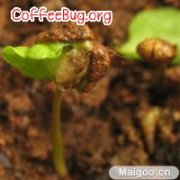
In the process of coffee cultivation, coffee is grown with seeds with endocarp.
In the process of coffee cultivation, some people mistakenly think that coffee is grown directly with raw beans, but it takes a long time to grow but find that it does not sprout. In fact, coffee is grown with seeds with endocarp (Parchment). The inner fruit (or sheepskin or paper parchment) refers to the tea-brown hard skin that wraps the coffee seeds, and the coffee beans attached to that layer are called Parchment Bean. Dial